
'If some measures are implemented quickly, they can help revive growth.'

The government should frame new policies to assure growth.

While the RBI, in the recent past, appeared keen to move to an inflation-targeting framework, industry and academia remain divided on this issue.

Deflation masked the rise in food inflation to a 5-month high.

Deutsche Bank expects the Sensex to climb only 8% in 2017 to 29,000, and expects high volatility.

Credible fiscal consolidation has been a consistent pre-condition to easing the monetary policy stance as far as the RBI is concerned.

While information technology companies will benefit, firms with high foreign borrowings or heavy dependence on imports will be hurt.

Milind Deora, minister of state for communication and information technology and shipping, is one of the Congress' young guns under Rahul Gandhi. He tells Kavita Chowdhury that the core problem for the United Progressive Alliance in its second term has been its inability to communicate effectively. Edited excerpts:

Traders believe the RBI will step in more strongly, if the rupee starts falling towards 65

The GST has been a great achievement, but it does suffer from weaknesses, says Chief Economic Adviser Arvind Subramanian.

Jaitley remained steadfast in not caving in to sustained Opposition pressure.

Soft oil prices are expected to persist in 2015 and will be accompanied by significant real income shifts from oil-exporting to oil-importing countries.

The fact that the US dollar has become the world's preferred reserve currency is now the core of global financial crisis, says Mohan Guruswamy.

With RBI likely to make credit costlier and banks to follow, some ideas on switching money to be able to do this.

The RBI must first deal with the adverse turn of events in the CPI.
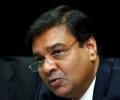
As inflation rate is near the upper limit of the comfort zone, experts rule out rate cuts anytime soon

CPI inflation could fall marginally but stay above RBI's comfort level.
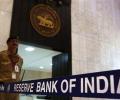
Scanty rain would have put extra pressure on food prices.

Reiterating his earlier stance, BJP's Rajya Sabha member Subramanian Swamy has written a letter to Prime Minister Narendra Modi, asking him to sack RBI Governor Raghuram Rajan.

'Investors hate uncertainty and the demonetisation move certainly creates that.'
.jpg)
The Reserve Bank is scheduled to unveil its first quarter review of the monetary policy on July 30.
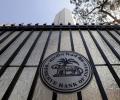
Three policymakers aware of the central bank's deliberations on the Budget said they are combing through the numbers to test how Jaitley struck a balance, and question some of the assumptions.


It is the six per cent target RBI is more concerned about.

The report analysed product launches of 2011, their success over three years, and reported 31 of the 14,509 products introduced that year were received well by consumers.
.jpg)
Prime Minister's key economic advisor C Rangarajan on Friday lowered the growth forecast for the current fiscal to 5.3 per cent from 6.4 per cent projected earlier and listed out host of measures, including further liberalisation of FDI norms to improve economic condition.
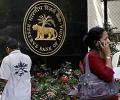
The study points out that for the determination of growth and investment at the macroeconomic level, the real interest rate is more relevant, even though the nominal interest rate is important for investment planning at the firm level.

Moody's listed six agenda on the list of pending reforms -- land acquisition Bill, labour law reforms, significant infrastructure investment, tangible benefit from Make in India initiative, tax administration and PSU bank reforms
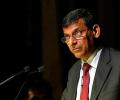
To the question on what comes first, clean up or growth, Rajan said the answer is unambiguously 'Clean up!'
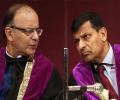
In cutting interest rates and giving a boost to the government's efforts to revive growth, RBI governor Raghuram Rajan displayed the pragmatism and flexibility familiar to those who work with him.

While Raghuram Rajan has said in the past that other factors, including domestic fundamentals, outweigh the US Fed policy meet, this time it would be different

India's foreign exchange reserves are at an all-time high.

Many macroeconomic forecasters have built predictive models on inflation, all of which highlight intense downward pressure on prices.

'Is this the only way for India to become a $5 trillion economy?' 'When you have unused foreign exchange here, why borrow more dollars?'

'Narendra Modi has had very good luck. Firstly, the fall of oil prices. You don't get that very often in your life and you certainly don't get that often when you are in government.' 'Secondly, the fantasy of Indian reforms has led to very strong capital inflows to have made his job much, much easier.' 'You ride the winds in times of fortune and he hasn't done that. At least, not yet.' 'Those winds of fortune which are blowing your way can certainly turn around easily. There are quite a few headwinds coming up. He may well, history will show, have missed the opportunities that existed.'

The RBI cut rates for third time in 2015 due to favourable economic conditions.
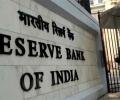
Headed by Urjit Patel, MPC for the fourth straight time kept the repo rate unchanged, at which it lends to the banks, at 6.25 per cent. The reverse repo, at which RBI borrows, will be 6 per cent.

A number of significant linkages between rainfall and economic outcomes have policy implications.

Expressing disappointment over the hike in repo rate by the RBI, India Inc on Friday said a rate cut by the bank would have helped ameliorate sentiments as businesses are "reeling" under a tight liquidity crunch due to high cost of capital.

The RBI cited lower-than-expected inflation, weak crude prices and weak demand, as well as the government's commitment to sticking to a fiscal deficit target as reasons.
